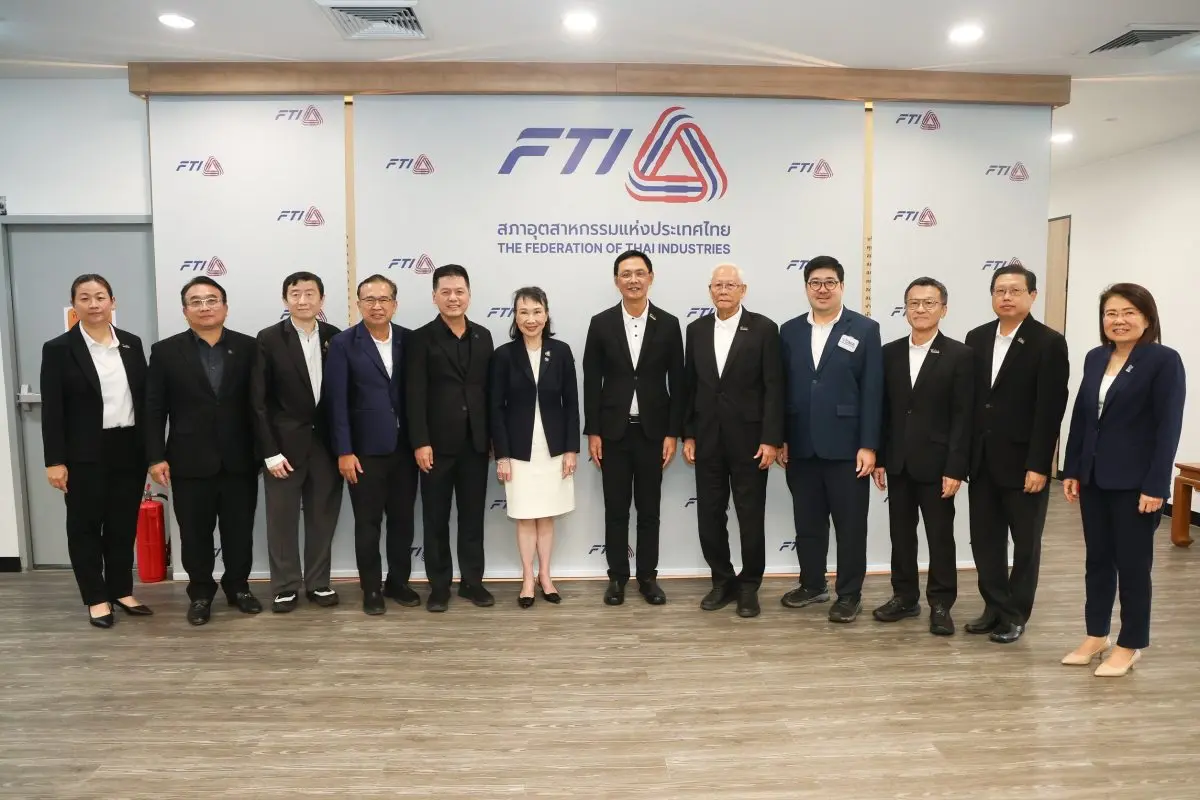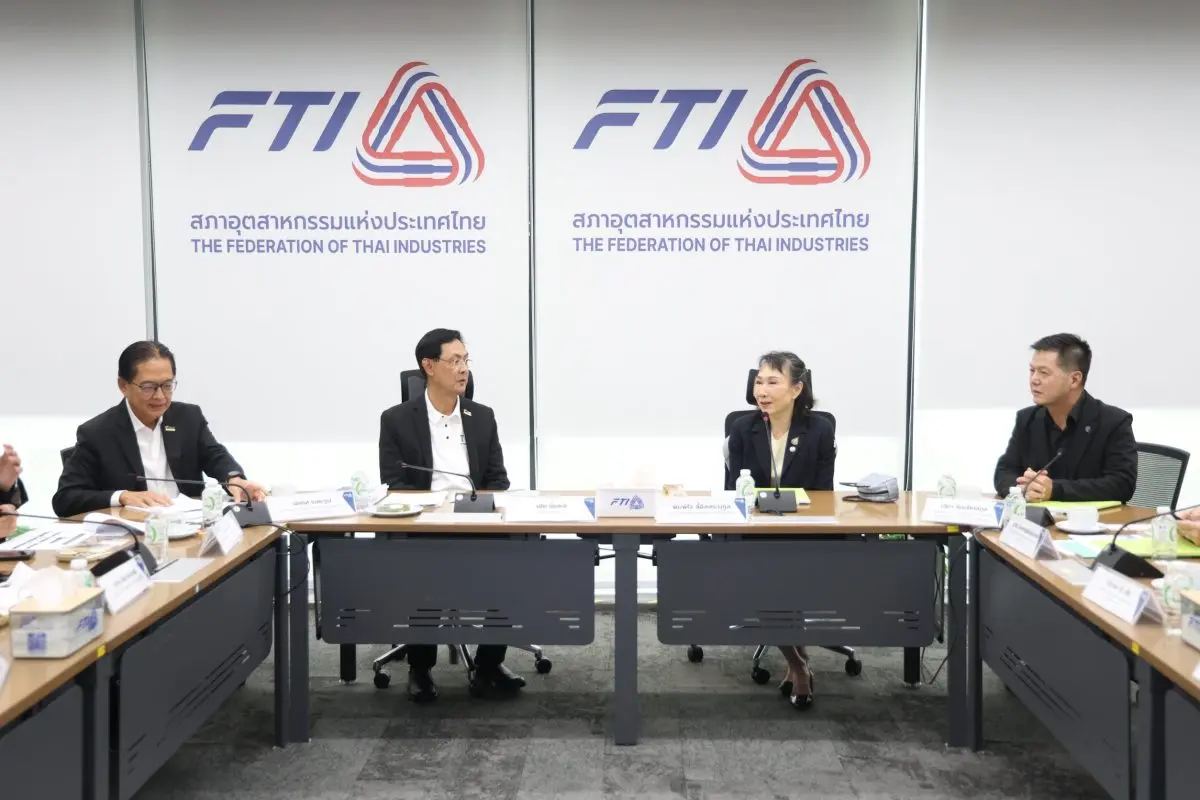
Thai Cement Manufacturers Association (TCMA) and the Federation of Thai Industries (FTI) are advancing their strategic collaboration by positioning Saraburi Sandbox as a real-world platform for industrial transformation, bringing together government, the private sector, and civil society to translate practical experience into broader industrial action, strengthen competitiveness, and support Thailand’s transition toward a low-carbon economy and Net Zero 2050.
Mr. Surachai Nimla-or, Chairman of Thai Cement Manufacturers Association, said that the transition to Net Zero is not only about reducing greenhouse gas emissions, but is directly linked to the competitiveness of the industrial sector. For the cement industry, the transition spans energy efficiency and security, reducing reliance on fossil fuels, developing low-carbon cement products, raw material efficiency and management, investing in technology, as well as establishing standards and regulations that enable industry to adapt.
“The key challenge today is not simply reducing carbon emissions, but ensuring that the transition creates new capabilities for industry — in technology, production efficiency, energy transition, and product development. At the same time, industry must be able to invest and adapt in practical terms” said Mr. Surachai.
“Saraburi Sandbox” — A Model for Practical Action
One of the key outcomes of discussions between TCMA and FTI is to bring the experience of the cement industry’s transition in Saraburi into the broader industrial transformation agenda. The Saraburi Sandbox serves as a platform for testing new approaches, learning from real-world implementation, and identifying both the results and constraints that emerge in practice.
In the cement industry, decarbonization is being pursued across multiple dimensions, from the transition from Portland cement to hydraulic cement and the development of LC3, to the use of alternative fuels and renewable energy, waste heat recovery, and the development of Carbon Capture, Utilization and Storage (CCUS) technologies. Raw material management and sustainable mining are also important components of the transition across the production value chain.
The initiative therefore looks beyond carbon-reduction technologies alone. It also brings together government, industry, and civil society to explore how the transition can take place alongside economic development and improvements in quality of life in local communities.
The experience provides practical lessons that can be applied beyond the cement industry, particularly in creating the conditions for investment, innovation, and industrial adaptation.
From Practical Action to Enabling Regulatory Conditions
Experience from implementation shows that the transition depends not only on technology, but also on laws, regulations, and permitting processes, which can influence investment decisions and the adoption of new technologies.
TCMA and FTI will prepare policy recommendations for consideration by the government, drawing on issues identified through the cement industry’s transition and connecting them with key conditions for broader industrial transformation, including raw materials, energy, technology, infrastructure, standards, and regulations to support investment and industry adaptation.
MiT and Green Procurement to Support Low-Carbon Products
Another important area is establishing public procurement approaches that create greater opportunities for low-carbon products. TCMA supports the promotion of Made in Thailand (MiT) alongside green public procurement to encourage the use of locally manufactured products that meet quality standards and contribute to greenhouse gas emissions reduction.
At the same time, the application of standards such as TIS 9999 can help connect standards, quality, and sustainability with the development of products and production processes.
“The collaboration between TCMA and FTI seeks to bring lessons from the transformation of the cement industry; particularly practical action in Saraburi into the broader Thai industrial transition. The aim is to strengthen the capacity of Thai industry to adapt, innovate, and compete, while expanding collective action toward Thailand’s Net Zero 2050 goal” Mr. Surachai concluded.