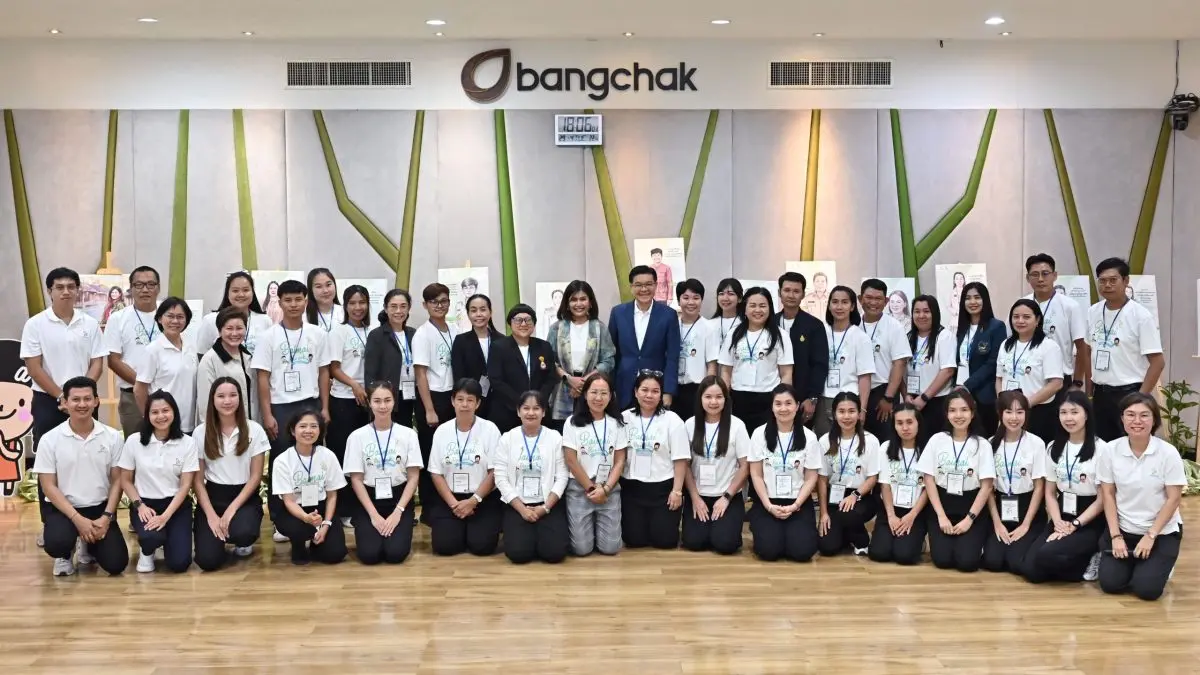
The Bai Mai Pun Suk Foundation organized the activity “Empowering Model Teachers and Building a Learning Network” at the Bangchak Phra Khanong Refinery to expand the impact of Grade 1 (Prathom 1) teacher development in addressing childhood illiteracy. The initiative focuses on building a network through model teachers, enabling the transfer of knowledge and experience to a broader network of schools.
The Bai Mai Pun Suk Foundation, established by the Bangchak Group, has implemented this initiative in collaboration with Tungsak Asom to develop Grade 1 teachers and educational personnel through the program “Read and Write with Ease.” The program emphasizes a systematic approach to Thai‑language instruction, combined with close monitoring and ongoing guidance for teachers, to ensure their students can read and write effectively. At present, the network includes more than 370 schools across 61 provinces nationwide.
Mr. Yodphot Wongrakmit, Chairman of the Bai Mai Pun Suk Foundation, stated that the Foundation was established by the Bangchak Group, with support from various sectors that share a common commitment to advancing education. The Foundation places particular emphasis on addressing Prathom 1 literacy challenges, especially by developing Prathom 1 teachers, who are the foundation of learning. Early reading and writing skills play a crucial role in shaping children’s thinking and learning outcomes throughout all stages of education.
Observations show that “providing a platform for teachers to exchange knowledge and experiences helps strengthen collaboration and supports the development of a more robust network‑based approach. The Foundation will continue to promote such activities to enhance sustainability and expand positive impact across Thailand’s education system. As the Foundation enters its 10th year, it is also preparing to develop an information management system to support data administration and serve as a communication platform for knowledge sharing, fostering a learning community focused on literacy development while enabling more systematic monitoring of outcomes.”
Ms. Naiduangta Patummasoot, an academic specialist in youth literacy from Tungsak Asom, explained that teaching children to read and write requires not only structured phonics and spelling exercises arranged in a clear progression of skills, but also the application of the “Four‑Step Skills Ladder,” which serves as a key mechanism in guiding students toward literacy.
The 10‑year collaboration between Tungsak Asom and the Bai Mai Pun Suk Foundation provides clear evidence that continuous teacher development, through training, school visits, and close mentoring of Prathom 1 teachers, can effectively address literacy challenges. This approach has led to tangible and measurable improvements in both teacher capabilities and student outcomes. As teachers consistently apply what they learn in practice, they gain confidence while observing meaningful progress among their students. Once teachers are able to teach accurately and comprehensively to the level of becoming strong role models, they earn the trust to share knowledge with fellow teachers both within and beyond their schools.
This creates an ongoing cycle of knowledge transfer, expanding into a broader collaborative network. A key success factor, she emphasized, is applying the Four‑Step Skills Ladder with discipline, consistency, and completeness to ensure effective expansion of the network.
Dr. Surapol Srisilp, Director of the Supervision, Monitoring, and Evaluation Unit, Mae Hong Son Primary Educational Service Area Office 2, stated that “Developing reading and writing skills in Mae Hong Son presents challenges due to ethnic diversity and geographical constraints. However, over the past two years of collaboration with the Bai Mai Pun Suk Foundation and Tungsak Asom, there have been clear improvements in both teacher capabilities and student outcomes. These improvements are reflected not only in better academic performance, but also in increased confidence and enjoyment of learning among students.”
Ms. Orpin Butngaam, a Prathom 1 teacher at Wat Tanod Tia School and a model teacher in the program, stated that, “The Four‑Step Skills Ladder approach has enabled students to genuinely acquire reading and writing skills. Through continuous refinement of teaching methods and consistent practice, students who previously struggled to read beyond textbook content have demonstrated clear progress in the classroom. The approach can also be further shared with other teachers and organizations.”
Ms. Paweena Phuengpang, Social Enterprise Manager of Bangchak Corporation Public Company Limited and Manager of the Bai Mai Pun Suk Foundation, said, “It’s a delight to receive positive feedback from foundation board members who attended the activity and from participants. Many expressed that the activity helped energize and motivate them in their work. Going forward, the Foundation will continue to expand the network by leveraging experienced model teachers to transfer knowledge to other schools, further scaling positive change on a broader level.”
The activity also provided an opportunity for representatives from Primary Educational Service Area Offices, school principals, and Prathom 1 model teachers in the literacy program to exchange experiences, share teaching approaches, and strengthen collaboration to build a broader network of model teachers. The initiative aims to support the long-term sustainable development of reading and writing skills among Thai children.
In addition, the participants visited the BCPG Learning Center in Bang Pa-in, followed by Bangchak Phra Khanong Refinery to learn more about Bangchak Group’s operations. The program also included visits to the Rattanakosin Exhibition Hall, a traditional Khon performance, and SEA Life Bangkok Ocean World at Siam Paragon, providing participants with an opportunity to gain deeper insights into energy, Thai culture, history, and environmental conservation through immersive experiences that reflect the diversity and unique identity of Thailand from multiple perspectives.